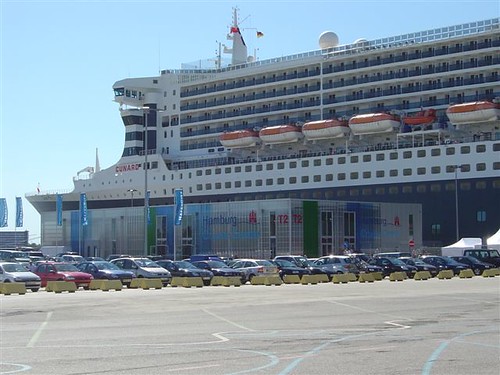

June 30, 2007
QE2 to embark on farewell tour
This from theaustralian.new.com
"THE world's most famous ocean liner, Queen Elizabeth 2, is set to embark on a series of farewell voyages before retiring from the high seas to become a luxury floating hotel in Dubai.
Launched by the Queen at Clydebank in Scotland in 1967, the 70,000-tonne vessel has been sold for $118 million to the Dubai World, a state-owned tourism company that operates The Palm Jumeirah resort.
From 2009, the ship will become a hotel, retail and entertainment destination berthed at a specially-built pier at the resort on the palm-shaped, artificial island.
The longest-serving ship in the Cunard's history, QEII has undertaken 25 world cruises, crossed the Atlantic more than 800 times and has carried more than three million passengers.
Cunard Line yesterday announced the special farewell voyages would go on sale simultaneously around the world at 11pm (AEST) today.
These voyages include "Farewell to the British Isles", a final crossing of the Atlantic to New York, a "Farewell to America Crossing" back to Britain, and the final voyage from Southampton to Dubai in November.
A spokesman for Cunard said while Australia wouldn't be part of the special farewell voyages in Europe late next year, its final world voyage in February included Australia.
QEII will visit Australia for the last time in February and March next year, taking in Sydney, Melbourne, Hobart, Adelaide, Albany and Perth as part of its 26th and final world voyage.
Cunard president and managing director Carol Marlow said: "These voyages will mark the historic departure of QEII from the Cunard fleet, in a very special way.
"QEII is a much-loved vessel and we wanted to give her many loyal fans a chance to say goodbye, as well as give those who have never had the opportunity to sail abroad her the chance to do just that in her last season with Cunard."
QEII is the longest-serving liner in Cunard's 168-year history and was their longest serving flagship.
"THE world's most famous ocean liner, Queen Elizabeth 2, is set to embark on a series of farewell voyages before retiring from the high seas to become a luxury floating hotel in Dubai.
Launched by the Queen at Clydebank in Scotland in 1967, the 70,000-tonne vessel has been sold for $118 million to the Dubai World, a state-owned tourism company that operates The Palm Jumeirah resort.
From 2009, the ship will become a hotel, retail and entertainment destination berthed at a specially-built pier at the resort on the palm-shaped, artificial island.
The longest-serving ship in the Cunard's history, QEII has undertaken 25 world cruises, crossed the Atlantic more than 800 times and has carried more than three million passengers.
Cunard Line yesterday announced the special farewell voyages would go on sale simultaneously around the world at 11pm (AEST) today.
These voyages include "Farewell to the British Isles", a final crossing of the Atlantic to New York, a "Farewell to America Crossing" back to Britain, and the final voyage from Southampton to Dubai in November.
A spokesman for Cunard said while Australia wouldn't be part of the special farewell voyages in Europe late next year, its final world voyage in February included Australia.
QEII will visit Australia for the last time in February and March next year, taking in Sydney, Melbourne, Hobart, Adelaide, Albany and Perth as part of its 26th and final world voyage.
Cunard president and managing director Carol Marlow said: "These voyages will mark the historic departure of QEII from the Cunard fleet, in a very special way.
"QEII is a much-loved vessel and we wanted to give her many loyal fans a chance to say goodbye, as well as give those who have never had the opportunity to sail abroad her the chance to do just that in her last season with Cunard."
QEII is the longest-serving liner in Cunard's 168-year history and was their longest serving flagship.
Ships that pass in the night: of Queen Mary II and other passenger liners
This interesting and well written article appeared on thenews.com about QM2, QE2 and other ships
"By Kaleem OmarThe title of this article comes from the American writer Henry Wadsworth Longfellow’s “Tales of a Wayside Inn”, a collection of short stories told by a group of travelers, published in 1863. In 1867 Longfellow produced his translation of Dante’s “Divine Comedy”, on which he had worked for many years. It was highly acclaimed at the time, but is now considered to be somewhat pedestrian. Although Longfellow’s poetry is still widely known and is still taught in schools across America and other parts of the English-speaking world, most critics today regard it with some mockery as more often manufactured than deeply felt.
All this notwithstanding, Longfellow’s felicitous phrase “ships that pass in the night” has passed into the language. And that, when you get right down to it, is about all most writers can hope for. W. H. Auden, one of the twentieth century’s greatest poets, once remarked, only slightly tongue-in-cheek, that if he could get a phrase from his poems into the Oxford English Dictionary, he would die content that his life had not been lived in vain. If Longfellow were alive today, he, too, might have been moved to say that his life had not been lived entirely in vain.
On the subject of ships that pass in the night, however, what I want to talk about here is the British Cunard Line’s new flagship cruise liner Queen Mary II – named after Queen Mary II of England (who reigned from 1689 to 1694, and died of smallpox) – which made its maiden voyage across the Atlantic in October 2003 from England to Florida and has made numerous cruises between England and America in the years since then, carrying well-heeled passengers in the kind of luxurious comfort most of us can only dream about.
The $ 800 million, 150,000-ton trans-Atlantic liner is the biggest and most expensive passenger ship ever built. It is 1,132 feet long, with a beam of 135 ft and a height (keel to funnel) of 236.2 feet. It is powered by a 157,000 horsepower gas turbine-cum-diesel electric plant and propelled by four pods of 21.5 megawatt each, giving it a top speed of approximately 30 knots (34.5 miles per hour).
The QM2, as it is popularly known, has a crew of 1,253 and can carry 2,650 passengers. Among other things, the luxury vessel features a planetarium, 22 elevators and the world’s largest floating library. Passengers can enjoy six restaurants, 14 bars and clubs, theatre, swimming pools, a disco and casino. The 1,310 cabins include duplexes with private gymnasiums and penthouses with butler service. Captain Ronald Warwick, surveying the interior of the ship in September 2003 before it set sail from St. Nazaire, France, where it was built, for its home port of Southampton on the southern coast of England, said it was a cut above Cunard’s Queen Elizabeth II (QE2), on which he served 14 years as captain. “I always thought that was the best ship in the world, but now I think we have competition with this one,” Warwick said.
The QM2 has joined an illustrious list of massive passenger ships. The QE2 – whose trans-Atlantic route was taken over by the new ship in April 2004 – was built in 1967; the original Queen Mary was launched in 1934 and is now a hotel in Long Beach, California, where it is permanently anchored at the dock – a sad fate, it seems to me, for what was once the Queen of the Seas.
The original Queen Mary was built to take the Blue Riband for the fastest Atlantic crossing by a passenger liner, and was to hold the record both ways – westbound from Southampton to New York and eastbound from New York to Southampton – until 1952. Though built during the depression years of the 1930s, she was by no means an austere ship. In fact, she was a fitting successor to the Aquitania, with which she operated prior to World War II.Wartime service as a troopship was marred by a collision in 1942 with the Royal Navy cruiser HMS Caracoa, which sank with the loss of most of her crew (there were only 26 survivors).
Because of danger from lurking German U-boats, the Queen Mary was forbidden to stop and render assistance. During her career in mercantile service, the Queen Mary completed 1,001 Atlantic crossings. In 1967, Cunard sold her to the City of Long Beach, California, as a museum and hotel. To reach her new home, she had to round Cape Horn, being too wide by just 30 inches to pass through the Panama Canal.
Though the Queen Mary was nearly the same length as the QM2 (1,019 ft vs 1,132 ft), she was only about half the tonnage (80,744 tons vs 150,000 tons). But with a service speed of 29 knots, she was nearly as fast as the QM2. The QE2, the last Cunard liner built for the regular trans-Atlantic passenger service, was an anachronism even before she was launched on November 20th, 1967, airline travel having surpassed the seaborne trade. Her maiden voyage was delayed by more than five months because of mechanical trouble, which continued to plague her at intervals throughout her career.
In 1974, she was left adrift off Bermuda after an engine failure; in 1975, she hit a coral reef off the Bahamas; and, in 1976, she was partially crippled by an engine-room fire while in the eastern Atlantic, forcing her return to Southampton. In 1982, she played a key role as a troopship in the Falklands war between Britain and Argentina. Later, after a refit, she had an active career as a cruise liner, including voyages around the world.
She still makes occasional voyages between Southampton and New York – a run on which she was replaced by the QM2 in February 2004.Long before there was a Queen Elizabeth II, however, (the ship, that is, not the British monarch), there was a Princesse Elisabeth (and, no, Princesse and Elisabeth are not, repeat not, misprints; that’s the way the names of those ships were spelt). In the service between Ostend and Dover, the changeover from nineteenth century paddle wheels to turbine-driven ships came in 1904 with the introduction of the Princesse Elisabeth. Although she had a design speed of 24 knots, during her trials off Greenstock, Scotland, she achieved 26.25 knots, making her the fastest ship afloat.
As a result of her success, two more ships of similar design were built. Entering service in 1910, with two more slightly smaller versions following on shortly afterwards. However, none of these vessels was as successful as the Princesse Elisabeth, and it was not until 1922 that a ship was added to the Ostend-Dover service that could match her performance.
In fact, Princesse Elizabeth set a trend for fast ferry service across the North Sea and could carry a sizeable payload of 900 passengers in reasonable comfort.During October 1907, the Cunard Line’s 31,500-ton Lusitania, the biggest ship in the world at the time and the most luxuriously appointed, held both eastbound and westbound Blue Ribands simultaneously; she eventually achieved an average speed of 25.65 knots over 5,352 km (2,890 nautical miles).
Her achievements, however, have tended to be overshadowed by the manner of her demise. On May 7th, 1915, she was sunk without warning by a torpedo from the German submarine U-20 off the Old Head of Kinsale on the south coast of Ireland, with the loss of 1,198 (some reports say 1,201) men, women and children. About 228 were US citizens, and it was long held that their deaths were a factor that eventually persuaded the United States to join the Allies in World War I. A factor in her loss was her master’s inexplicable failure to zig-zag at maximum speed.
And then, of course, there was the Titanic. Billed by its owners as “unsinkable,” the 46,328-ton White Star liner left Southampton on her maiden voyage bound for New York via the French port of Cherbourg and the Irish port of Queenstown on April 10th, 1912. By the afternoon of April 14th, the Titanic was some 1,100 km (600 nautical miles) east of Newfoundland. Her wireless operators received warnings of ice in her path, but her captain, Edward Smith, chose to ignore them and the ship continued at an undiminished 22 knots. At 23.40 hours, a lookout reported ice ahead. The first officer gave orders to leave it to starboard, but the ship grazed an underwater spur, buckling her port side hull plates along the riveted seams. She sank, with the loss of 1,503 of the 2,223 people aboard, in less than two-and-a-half hours.
Much of the resulting scandal centred on the disproportionate number of lives lost (75 per cent) among the third-class passengers. Lady Astor, who known for her sharp tongue and icy demeanour, was one of those who survived. She was a first class passenger, naturally. The story goes that she and some friends of hers were sitting in one of the ship’s lounges, having a drink, when the vessel hit the iceberg. As the walls of the iceberg came crashing through the sides of the ship, Lady Astor, with a hauteur born of centuries of aristocratic breeding, was said to have turned to her companions and remarked, “I asked for ice, but this is ridiculous!”
"By Kaleem OmarThe title of this article comes from the American writer Henry Wadsworth Longfellow’s “Tales of a Wayside Inn”, a collection of short stories told by a group of travelers, published in 1863. In 1867 Longfellow produced his translation of Dante’s “Divine Comedy”, on which he had worked for many years. It was highly acclaimed at the time, but is now considered to be somewhat pedestrian. Although Longfellow’s poetry is still widely known and is still taught in schools across America and other parts of the English-speaking world, most critics today regard it with some mockery as more often manufactured than deeply felt.
All this notwithstanding, Longfellow’s felicitous phrase “ships that pass in the night” has passed into the language. And that, when you get right down to it, is about all most writers can hope for. W. H. Auden, one of the twentieth century’s greatest poets, once remarked, only slightly tongue-in-cheek, that if he could get a phrase from his poems into the Oxford English Dictionary, he would die content that his life had not been lived in vain. If Longfellow were alive today, he, too, might have been moved to say that his life had not been lived entirely in vain.
On the subject of ships that pass in the night, however, what I want to talk about here is the British Cunard Line’s new flagship cruise liner Queen Mary II – named after Queen Mary II of England (who reigned from 1689 to 1694, and died of smallpox) – which made its maiden voyage across the Atlantic in October 2003 from England to Florida and has made numerous cruises between England and America in the years since then, carrying well-heeled passengers in the kind of luxurious comfort most of us can only dream about.
The $ 800 million, 150,000-ton trans-Atlantic liner is the biggest and most expensive passenger ship ever built. It is 1,132 feet long, with a beam of 135 ft and a height (keel to funnel) of 236.2 feet. It is powered by a 157,000 horsepower gas turbine-cum-diesel electric plant and propelled by four pods of 21.5 megawatt each, giving it a top speed of approximately 30 knots (34.5 miles per hour).
The QM2, as it is popularly known, has a crew of 1,253 and can carry 2,650 passengers. Among other things, the luxury vessel features a planetarium, 22 elevators and the world’s largest floating library. Passengers can enjoy six restaurants, 14 bars and clubs, theatre, swimming pools, a disco and casino. The 1,310 cabins include duplexes with private gymnasiums and penthouses with butler service. Captain Ronald Warwick, surveying the interior of the ship in September 2003 before it set sail from St. Nazaire, France, where it was built, for its home port of Southampton on the southern coast of England, said it was a cut above Cunard’s Queen Elizabeth II (QE2), on which he served 14 years as captain. “I always thought that was the best ship in the world, but now I think we have competition with this one,” Warwick said.
The QM2 has joined an illustrious list of massive passenger ships. The QE2 – whose trans-Atlantic route was taken over by the new ship in April 2004 – was built in 1967; the original Queen Mary was launched in 1934 and is now a hotel in Long Beach, California, where it is permanently anchored at the dock – a sad fate, it seems to me, for what was once the Queen of the Seas.
The original Queen Mary was built to take the Blue Riband for the fastest Atlantic crossing by a passenger liner, and was to hold the record both ways – westbound from Southampton to New York and eastbound from New York to Southampton – until 1952. Though built during the depression years of the 1930s, she was by no means an austere ship. In fact, she was a fitting successor to the Aquitania, with which she operated prior to World War II.Wartime service as a troopship was marred by a collision in 1942 with the Royal Navy cruiser HMS Caracoa, which sank with the loss of most of her crew (there were only 26 survivors).
Because of danger from lurking German U-boats, the Queen Mary was forbidden to stop and render assistance. During her career in mercantile service, the Queen Mary completed 1,001 Atlantic crossings. In 1967, Cunard sold her to the City of Long Beach, California, as a museum and hotel. To reach her new home, she had to round Cape Horn, being too wide by just 30 inches to pass through the Panama Canal.
Though the Queen Mary was nearly the same length as the QM2 (1,019 ft vs 1,132 ft), she was only about half the tonnage (80,744 tons vs 150,000 tons). But with a service speed of 29 knots, she was nearly as fast as the QM2. The QE2, the last Cunard liner built for the regular trans-Atlantic passenger service, was an anachronism even before she was launched on November 20th, 1967, airline travel having surpassed the seaborne trade. Her maiden voyage was delayed by more than five months because of mechanical trouble, which continued to plague her at intervals throughout her career.
In 1974, she was left adrift off Bermuda after an engine failure; in 1975, she hit a coral reef off the Bahamas; and, in 1976, she was partially crippled by an engine-room fire while in the eastern Atlantic, forcing her return to Southampton. In 1982, she played a key role as a troopship in the Falklands war between Britain and Argentina. Later, after a refit, she had an active career as a cruise liner, including voyages around the world.
She still makes occasional voyages between Southampton and New York – a run on which she was replaced by the QM2 in February 2004.Long before there was a Queen Elizabeth II, however, (the ship, that is, not the British monarch), there was a Princesse Elisabeth (and, no, Princesse and Elisabeth are not, repeat not, misprints; that’s the way the names of those ships were spelt). In the service between Ostend and Dover, the changeover from nineteenth century paddle wheels to turbine-driven ships came in 1904 with the introduction of the Princesse Elisabeth. Although she had a design speed of 24 knots, during her trials off Greenstock, Scotland, she achieved 26.25 knots, making her the fastest ship afloat.
As a result of her success, two more ships of similar design were built. Entering service in 1910, with two more slightly smaller versions following on shortly afterwards. However, none of these vessels was as successful as the Princesse Elisabeth, and it was not until 1922 that a ship was added to the Ostend-Dover service that could match her performance.
In fact, Princesse Elizabeth set a trend for fast ferry service across the North Sea and could carry a sizeable payload of 900 passengers in reasonable comfort.During October 1907, the Cunard Line’s 31,500-ton Lusitania, the biggest ship in the world at the time and the most luxuriously appointed, held both eastbound and westbound Blue Ribands simultaneously; she eventually achieved an average speed of 25.65 knots over 5,352 km (2,890 nautical miles).
Her achievements, however, have tended to be overshadowed by the manner of her demise. On May 7th, 1915, she was sunk without warning by a torpedo from the German submarine U-20 off the Old Head of Kinsale on the south coast of Ireland, with the loss of 1,198 (some reports say 1,201) men, women and children. About 228 were US citizens, and it was long held that their deaths were a factor that eventually persuaded the United States to join the Allies in World War I. A factor in her loss was her master’s inexplicable failure to zig-zag at maximum speed.
And then, of course, there was the Titanic. Billed by its owners as “unsinkable,” the 46,328-ton White Star liner left Southampton on her maiden voyage bound for New York via the French port of Cherbourg and the Irish port of Queenstown on April 10th, 1912. By the afternoon of April 14th, the Titanic was some 1,100 km (600 nautical miles) east of Newfoundland. Her wireless operators received warnings of ice in her path, but her captain, Edward Smith, chose to ignore them and the ship continued at an undiminished 22 knots. At 23.40 hours, a lookout reported ice ahead. The first officer gave orders to leave it to starboard, but the ship grazed an underwater spur, buckling her port side hull plates along the riveted seams. She sank, with the loss of 1,503 of the 2,223 people aboard, in less than two-and-a-half hours.
Much of the resulting scandal centred on the disproportionate number of lives lost (75 per cent) among the third-class passengers. Lady Astor, who known for her sharp tongue and icy demeanour, was one of those who survived. She was a first class passenger, naturally. The story goes that she and some friends of hers were sitting in one of the ship’s lounges, having a drink, when the vessel hit the iceberg. As the walls of the iceberg came crashing through the sides of the ship, Lady Astor, with a hauteur born of centuries of aristocratic breeding, was said to have turned to her companions and remarked, “I asked for ice, but this is ridiculous!”
June 26, 2007
Why couldn't QE2 have remained in her home port?
This interesting article and views about the Southampton view on the QE2 move from thisishampshire.com
"IT was a sentimental Edwardian music hall song of years ago but now, almost a century later, it's words could not be more appropriate as Southampton prepares to say a long goodbye to the liner, Queen Elizabeth 2.
The song's chorus went: "We've been together now for 40 years, An' it don't seem a day too much.'' How true that is. Ever since the world famous Cunarder was launched in September, 1967, the city of Southampton and QE2 have been inextricably linked.
In fact, for many people, her distinctive funnel and elegant shape is as much a symbol of the city as the Bargate.
Her graceful decks have, over the decades, played host to royalty, film stars, sporting champions, world leaders, showbusiness personalities and captains of industry.
From the moment passengers step on board into the warm wood-panelled mid-ships lobby, where usually a harpist is playing, QE2 somehow seems to wrap herself around guests, cossets and treats them to an unequalled experience, hallmarked by the ship's understated luxury.
QE2 was at the pinnacle of her career during the years she continued the great Cunard tradition of scheduled crossings from Southampton to New York.
An Atlantic passage is always an adventure but QE2 was built to power her way through these unpredictable seas and when, on one westbound crossing, an enormous 95ft rogue wave hit the liner, she took it in her stride.
The most powerful civilian vessel ever made, QE2 still has the ability of going astern faster than many new ships can travel forward.
Her sumptuous surroundings offer passengers the very best of everything, her famed grill rooms bywords for exquisite haute cuisine and at any one time, stored away in her larders, is a third of the total global production of caviar.
Underneath her name, on the ship's mighty hull, and picked out in large metal letters is the word "Southampton'', a tangible and strong connection that has existed ever since the day she first entered the water 40 years ago.
Now this unique link is to be severed forever as QE2 has been sold off for £50m to be turned into a floating resort in the oil-rich Middle East state of Dubai.
Real emotions of shock, anger and deep disappointment were felt throughout Southampton earlier this week as the city faced up, with disbelief, to the fact that in just 17 months' time QE2 will leave the docks for the final time, never to return.
At 40 years old, QE2 is an elderly dame as far as ships are concerned and for many who have enjoyed a long love affair with the liner, there was the sad realisation that this was indeed the end of an era.
Some were upset at the thought of never seeing her familiar outline on the city's skyline in the future, others were annoyed Southampton was not given the opportunity to buy the liner, while former passengers and crew just could not bear the thought of the most famous ship in the world ending up with her engines ripped out, never to voyage the oceans again.
There were also suggestions it might have been better for QE2 to be sent to the scrapyard and then remembered in all her glory as a liner, supremely designed to face the rigours of the seas, rather than tied up and forever denied her real role as one of the great greyhounds of ocean travel.
QE2, the last great, true ocean liner to be built in Great Britain, bridges the decades between today's modern cruise ships and the golden era of transatlantic travel when the original Queen Mary and Queen Elizabeth reigned supreme over the waves.
After the shock, came anger as people asked: "Why was Southampton never even given the chance of bidding for QE2 so she could remain in her home port?'' A consortium of businessmen and shipping enthusiasts had long cherished the dream of eventually seeing QE2 permanently moored on the city's waterfront as a major tourist attraction, conference centre and hotel.
Back in June, 2005, Terry Yarwood, a consortium member, wrote to Micky Arison, boss of Miami-based Carnival Corporation, Cunard's parent company, asking him, when QE2's time was at an end, if Southampton could make a bid for the liner.
"Carnival knew there was strong interest in Southampton to keep QE2 but we were never even given a chance,'' said Mr Yarwood.
"The deal with Dubai was signed and sealed before anyone knew anything about it.
"When QE2 leaves she will take with her one of the greatest missed opportunities that has slipped through the fingers of Southampton.
"She belongs here, not in some far-off place in the Middle East. She is the embodiment of not only the city's maritime heritage but of the nation as a whole.'' Mr Yarwood is confident the consortium could have raised the £50m asking price, said to be the largest sum ever paid for a ship heading for retirement, and he confirmed there had been interest in the project from an international hotel chain.
Of course QE2 would be a spectacular attraction, putting Southampton on the tourist map, and if enthusiasm and affection for the ship were all that was needed to save her, then the liner's long term future would indeed remain on the south coast.
In reality, though, keeping and maintaining a ship of such distinction would be an enormous undertaking and the £50m price tag would be just the beginning.
The first and most problematical obstacle would be identifying and acquiring a suitable long-term berth for the liner.
This would be no easy task as, although QE2 is small compared to today's vast new superliners twice her size, she is still a large ship and it is unlikely that somewhere, such as the port of Southampton, would gladly give up scarce quayside space for a scheme of this type.
So where else would QE2 go? Town Quay and Mayflower Park would not be able to support the visitors, vehicles and services needed to support the liner.
Perhaps an area around the Royal Pier? This would be expensive as dredging would be needed and land reclaimed from the sea.
Allowing for this initial stage to be successful, next would be many logistical hurdles, such as road infrastructure for access, the provision of a large area for car parking, the installation of permanent power and water supplies together with a sewage system, security and safety considerations, to be crossed.
Tourism expert, Shirley Pinn, director of Destination Southampton, agreed that the presence of QE2 in the city could only be good for the economy.
"Thousands of tourists would come every month and QE2 would provide a prestigious venue for a conference centre,'' said Ms Pinn.
"It would be a great asset for the city which does struggle not having a major attraction.'' The positioning of QE2, with her 950 cabins, which can accommodate up to 1,900 guests, would however have a significant impact on the existing hotel trade and there are fears this sudden large increase in the number of bedrooms available in the city would dilute the overall business as occupancy levels dropped.
Top Cunard executives say the sale of QE2 to Dubai is the best outcome for her future as millions of dollars will be lavished on the ship and the hot, dry climate will help maintain her the fabric.
As far as Dubai is concerned the acquisition of QE2 is a great coup and a spokesman guaranteed she would be "cherished''.
But now the countdown to Tuesday, November 11, 2008, when QE2 leaves Southampton forever, has begun and on that sad date the city will say farewell to an old friend.
"IT was a sentimental Edwardian music hall song of years ago but now, almost a century later, it's words could not be more appropriate as Southampton prepares to say a long goodbye to the liner, Queen Elizabeth 2.
The song's chorus went: "We've been together now for 40 years, An' it don't seem a day too much.'' How true that is. Ever since the world famous Cunarder was launched in September, 1967, the city of Southampton and QE2 have been inextricably linked.
In fact, for many people, her distinctive funnel and elegant shape is as much a symbol of the city as the Bargate.
Her graceful decks have, over the decades, played host to royalty, film stars, sporting champions, world leaders, showbusiness personalities and captains of industry.
From the moment passengers step on board into the warm wood-panelled mid-ships lobby, where usually a harpist is playing, QE2 somehow seems to wrap herself around guests, cossets and treats them to an unequalled experience, hallmarked by the ship's understated luxury.
QE2 was at the pinnacle of her career during the years she continued the great Cunard tradition of scheduled crossings from Southampton to New York.
An Atlantic passage is always an adventure but QE2 was built to power her way through these unpredictable seas and when, on one westbound crossing, an enormous 95ft rogue wave hit the liner, she took it in her stride.
The most powerful civilian vessel ever made, QE2 still has the ability of going astern faster than many new ships can travel forward.
Her sumptuous surroundings offer passengers the very best of everything, her famed grill rooms bywords for exquisite haute cuisine and at any one time, stored away in her larders, is a third of the total global production of caviar.
Underneath her name, on the ship's mighty hull, and picked out in large metal letters is the word "Southampton'', a tangible and strong connection that has existed ever since the day she first entered the water 40 years ago.
Now this unique link is to be severed forever as QE2 has been sold off for £50m to be turned into a floating resort in the oil-rich Middle East state of Dubai.
Real emotions of shock, anger and deep disappointment were felt throughout Southampton earlier this week as the city faced up, with disbelief, to the fact that in just 17 months' time QE2 will leave the docks for the final time, never to return.
At 40 years old, QE2 is an elderly dame as far as ships are concerned and for many who have enjoyed a long love affair with the liner, there was the sad realisation that this was indeed the end of an era.
Some were upset at the thought of never seeing her familiar outline on the city's skyline in the future, others were annoyed Southampton was not given the opportunity to buy the liner, while former passengers and crew just could not bear the thought of the most famous ship in the world ending up with her engines ripped out, never to voyage the oceans again.
There were also suggestions it might have been better for QE2 to be sent to the scrapyard and then remembered in all her glory as a liner, supremely designed to face the rigours of the seas, rather than tied up and forever denied her real role as one of the great greyhounds of ocean travel.
QE2, the last great, true ocean liner to be built in Great Britain, bridges the decades between today's modern cruise ships and the golden era of transatlantic travel when the original Queen Mary and Queen Elizabeth reigned supreme over the waves.
After the shock, came anger as people asked: "Why was Southampton never even given the chance of bidding for QE2 so she could remain in her home port?'' A consortium of businessmen and shipping enthusiasts had long cherished the dream of eventually seeing QE2 permanently moored on the city's waterfront as a major tourist attraction, conference centre and hotel.
Back in June, 2005, Terry Yarwood, a consortium member, wrote to Micky Arison, boss of Miami-based Carnival Corporation, Cunard's parent company, asking him, when QE2's time was at an end, if Southampton could make a bid for the liner.
"Carnival knew there was strong interest in Southampton to keep QE2 but we were never even given a chance,'' said Mr Yarwood.
"The deal with Dubai was signed and sealed before anyone knew anything about it.
"When QE2 leaves she will take with her one of the greatest missed opportunities that has slipped through the fingers of Southampton.
"She belongs here, not in some far-off place in the Middle East. She is the embodiment of not only the city's maritime heritage but of the nation as a whole.'' Mr Yarwood is confident the consortium could have raised the £50m asking price, said to be the largest sum ever paid for a ship heading for retirement, and he confirmed there had been interest in the project from an international hotel chain.
Of course QE2 would be a spectacular attraction, putting Southampton on the tourist map, and if enthusiasm and affection for the ship were all that was needed to save her, then the liner's long term future would indeed remain on the south coast.
In reality, though, keeping and maintaining a ship of such distinction would be an enormous undertaking and the £50m price tag would be just the beginning.
The first and most problematical obstacle would be identifying and acquiring a suitable long-term berth for the liner.
This would be no easy task as, although QE2 is small compared to today's vast new superliners twice her size, she is still a large ship and it is unlikely that somewhere, such as the port of Southampton, would gladly give up scarce quayside space for a scheme of this type.
So where else would QE2 go? Town Quay and Mayflower Park would not be able to support the visitors, vehicles and services needed to support the liner.
Perhaps an area around the Royal Pier? This would be expensive as dredging would be needed and land reclaimed from the sea.
Allowing for this initial stage to be successful, next would be many logistical hurdles, such as road infrastructure for access, the provision of a large area for car parking, the installation of permanent power and water supplies together with a sewage system, security and safety considerations, to be crossed.
Tourism expert, Shirley Pinn, director of Destination Southampton, agreed that the presence of QE2 in the city could only be good for the economy.
"Thousands of tourists would come every month and QE2 would provide a prestigious venue for a conference centre,'' said Ms Pinn.
"It would be a great asset for the city which does struggle not having a major attraction.'' The positioning of QE2, with her 950 cabins, which can accommodate up to 1,900 guests, would however have a significant impact on the existing hotel trade and there are fears this sudden large increase in the number of bedrooms available in the city would dilute the overall business as occupancy levels dropped.
Top Cunard executives say the sale of QE2 to Dubai is the best outcome for her future as millions of dollars will be lavished on the ship and the hot, dry climate will help maintain her the fabric.
As far as Dubai is concerned the acquisition of QE2 is a great coup and a spokesman guaranteed she would be "cherished''.
But now the countdown to Tuesday, November 11, 2008, when QE2 leaves Southampton forever, has begun and on that sad date the city will say farewell to an old friend.
June 25, 2007
QE2 Lifeboats and Deck: Crossing the Atlantic

For more of this series of photos of the QE2 crossing the Atlantic in winter click on the links above to see the gallery on Fickr.com
June 24, 2007
The QE2 was the last beautiful ship - why are her successors so ugly?
The guardian.co.uk ran this story about how great the QE2 looks...
"The QE2 is to retire next year and become a big shop in Dubai. For a year or two I watched her grow on the stocks beside the Clyde, but when at last she was launched in September 1967, I was sitting in the chair of a Glasgow dentist having a tooth pulled out. The fact that I could have made a dental appointment on such a day still saddens me. I intended to be among the crowd in the fields opposite John Brown's shipyard in Clydebank, the favourite location of launch spectators, watching the ship slide stern-first into the river and settle there as the launch-chains tightened and the tugs took control. That evening I turned up for my night shift in a Glasgow newspaper office and found many special pages in preparation: pieces by writers who had a feeling for nautical history and poetry, especially Masefield; pictures of the Queen on the launch platform and also of the then-famous John Rannie, who as John Brown's foreman wore a bowler hat. Perhaps we were aware then that we were celebrating the last of something, but nobody was to know it was the birth of the world's last beautiful ship.
Amid this week's nostalgia, it is worth remembering the British era that produced her and its strange mixture of ailing tradition and social change. The Boeing 707 was killing the North Atlantic liner trade; 1958 was the last year in which more passengers crossed by sea than by air. Both Cunard Line and John Brown's (led respectively by Sir Basil Smallpiece and Lord Aberconway) were struggling. State subsidy was essential. Labour relations were terrible - the QE2's launch was the first at Brown's where a delegation from the men who had actually built the ship was invited to form part of the official party and attend the launch lunch (the workers took up the offer suspiciously and only after long discussion at the shop stewards' committee). From these unpromising foundations rose a ship that its owners hoped would capture the new face of Britain in the 1960s. Lord Snowdon, then the bright aesthetic guru, visited the designers in their studios. His wife, Princess Margaret, said that the new ship would show that British design was "not only exciting and full of vigorous common sense but ... out in front, leading the field". The QE2 would be a flagship for the new nation and not "a grandmotherly, chintzy hotel".
Now seen as the last in a long tradition (the Mauretania, the Queen Mary), the QE2 was meant to abolish it. The name itself was radical (not even a Roman II), the funnel looked like no other (and abandoned Cunard's red livery for black and white), many of the furnishings were moulded plastic. The ship being a British industrial product of the late 1960s, the high-pressure steam turbine broke down during sea trials, and the maiden voyage to New York was delayed by several months. Early travellers were not overwhelmed. As John Malcolm Brinnin writes in what is probably the best social history of the transatlantic sea trade, The Sway of the Grand Saloon: "American passengers sighed to heaven and ascribed it all to socialism, Carnaby Street and the decline of the British working orders." It could be argued that the QE2 only began to be loved when, after her duties in the Falklands war, the funnel was made bigger and repainted in the old Cunard livery, her British turbines were replaced by diesels during a German refit, and interior designers threw away the new in favour of the retro. A "grandmotherly, chintzy hotel" turned out to be, after all, what people were after.
She is very beautiful - and now almost alone in her beauty among sea-going ships - but this quality comes from the old conventions of naval architecture rather than the fashions of the 1960s. The QE2 was built to cross the rough winter seas of the North Atlantic at speeds approaching 30 knots, at a shipyard with a long history of the art. She has a curved bow and a round stern, a long empty foredeck between the bow and the navigating bridge, a sheer (or curvature) on the hull that has been enhanced by clever paintwork. The funnel is centred, more or less, and her hull is grey verging on black with upperworks plain white. Why this should constitute "beauty" is as tricky as all aesthetic questions but it conforms to the popular idea of "a proper ship". Why can more ships not be built like this? Or to put it another way, why are ships now so tall, so square, so ugly? The answer is simple enough - that if form follows function, then function follows economics - but in the cruise ship business where decks are sometimes stacked 12 high it can have brutal results: suddenly in Venice, for example, a large block of flats is towering over the Piazza San Marco, moving slowly upstream to discharge its 3,500 inhabitants and have its sewage pumped.
The move began with container ships 40 years ago. The container changed everything, cutting crew numbers and time spent unprofitably in ports, and demanding simpler ships with engine room and bridge perched at the stern to make as much room as possible for the cargo. A square hull can carry more than a rounded one; furthermore, curved steel plates cost more to make and to fit than flat ones. According to the maritime historian Peter Quartermaine, "It may be true that a hull with a curved stern is much more kindly in a following sea, but square means you can get more in. The people who build ships aren't the ones who sail in them."
The first generation of ships dedicated to cruising mainly comprised ocean liners made redundant by air travel, built to transport passengers from A to B. From the late 1970s purpose-built cruise ships were designed to fulfil the idea that the ships were destinations in themselves and could rival land resorts in their proliferation of theatres, gyms, spas, casinos, rock-climbing walls and shops. Cabins became rooms and rooms needed balconies rather than portholes. To get more balconies you needed more decks. Open deck space, once the scene of breezy outdoor pastimes such as quoits and shuffleboard, began to disappear as the superstructure was stretched from bow to stern. Quartermaine says, "When you're outside you're not spending any money. The reasoning is that simple."
In 2005, 16 million people took a cruise on about 280 ships. More are being built, nine to be launched next year and seven in 2009. Carnival, the world's largest cruise company, has ordered 10 at a cost of $500m (£250.2m) each from the Fincantieri yards in Italy. Typically, each will carry 3,500 passengers and 1,300 crew. Where are they all to be taken? The Bahamas and the Caribbean are saturated and the Mediterranean is quickly filling up. Several lines own small islands that have been outfitted to cater purely for cruise customers (the Disney line spent $25m developing Castaway Cay in the Bahamas) and there is speculation that they might build their own destinations, whole ports equipped with shops selling duty-free Prada handbags and scotch, like a sunny version of Heathrow.
Might there be a gap in this burgeoning market for the Quinlan Terry of naval architecture and ships that look like the old Queen Mary? So far, only the Disney line has tried. Their two ships have raked twin funnels and dark rounded hulls - at a distance they could pass for the swift prewar Italian liners that made Mussolini so proud. Closer to, there are flaws. The funnels have the emblem of Mickey's ears. Hanging upside down and painting from a bosun's chair over the stern is a 15ft-high model of Goofy. The marine Quinlan Terry has yet to be found.
"The QE2 is to retire next year and become a big shop in Dubai. For a year or two I watched her grow on the stocks beside the Clyde, but when at last she was launched in September 1967, I was sitting in the chair of a Glasgow dentist having a tooth pulled out. The fact that I could have made a dental appointment on such a day still saddens me. I intended to be among the crowd in the fields opposite John Brown's shipyard in Clydebank, the favourite location of launch spectators, watching the ship slide stern-first into the river and settle there as the launch-chains tightened and the tugs took control. That evening I turned up for my night shift in a Glasgow newspaper office and found many special pages in preparation: pieces by writers who had a feeling for nautical history and poetry, especially Masefield; pictures of the Queen on the launch platform and also of the then-famous John Rannie, who as John Brown's foreman wore a bowler hat. Perhaps we were aware then that we were celebrating the last of something, but nobody was to know it was the birth of the world's last beautiful ship.
Amid this week's nostalgia, it is worth remembering the British era that produced her and its strange mixture of ailing tradition and social change. The Boeing 707 was killing the North Atlantic liner trade; 1958 was the last year in which more passengers crossed by sea than by air. Both Cunard Line and John Brown's (led respectively by Sir Basil Smallpiece and Lord Aberconway) were struggling. State subsidy was essential. Labour relations were terrible - the QE2's launch was the first at Brown's where a delegation from the men who had actually built the ship was invited to form part of the official party and attend the launch lunch (the workers took up the offer suspiciously and only after long discussion at the shop stewards' committee). From these unpromising foundations rose a ship that its owners hoped would capture the new face of Britain in the 1960s. Lord Snowdon, then the bright aesthetic guru, visited the designers in their studios. His wife, Princess Margaret, said that the new ship would show that British design was "not only exciting and full of vigorous common sense but ... out in front, leading the field". The QE2 would be a flagship for the new nation and not "a grandmotherly, chintzy hotel".
Now seen as the last in a long tradition (the Mauretania, the Queen Mary), the QE2 was meant to abolish it. The name itself was radical (not even a Roman II), the funnel looked like no other (and abandoned Cunard's red livery for black and white), many of the furnishings were moulded plastic. The ship being a British industrial product of the late 1960s, the high-pressure steam turbine broke down during sea trials, and the maiden voyage to New York was delayed by several months. Early travellers were not overwhelmed. As John Malcolm Brinnin writes in what is probably the best social history of the transatlantic sea trade, The Sway of the Grand Saloon: "American passengers sighed to heaven and ascribed it all to socialism, Carnaby Street and the decline of the British working orders." It could be argued that the QE2 only began to be loved when, after her duties in the Falklands war, the funnel was made bigger and repainted in the old Cunard livery, her British turbines were replaced by diesels during a German refit, and interior designers threw away the new in favour of the retro. A "grandmotherly, chintzy hotel" turned out to be, after all, what people were after.
She is very beautiful - and now almost alone in her beauty among sea-going ships - but this quality comes from the old conventions of naval architecture rather than the fashions of the 1960s. The QE2 was built to cross the rough winter seas of the North Atlantic at speeds approaching 30 knots, at a shipyard with a long history of the art. She has a curved bow and a round stern, a long empty foredeck between the bow and the navigating bridge, a sheer (or curvature) on the hull that has been enhanced by clever paintwork. The funnel is centred, more or less, and her hull is grey verging on black with upperworks plain white. Why this should constitute "beauty" is as tricky as all aesthetic questions but it conforms to the popular idea of "a proper ship". Why can more ships not be built like this? Or to put it another way, why are ships now so tall, so square, so ugly? The answer is simple enough - that if form follows function, then function follows economics - but in the cruise ship business where decks are sometimes stacked 12 high it can have brutal results: suddenly in Venice, for example, a large block of flats is towering over the Piazza San Marco, moving slowly upstream to discharge its 3,500 inhabitants and have its sewage pumped.
The move began with container ships 40 years ago. The container changed everything, cutting crew numbers and time spent unprofitably in ports, and demanding simpler ships with engine room and bridge perched at the stern to make as much room as possible for the cargo. A square hull can carry more than a rounded one; furthermore, curved steel plates cost more to make and to fit than flat ones. According to the maritime historian Peter Quartermaine, "It may be true that a hull with a curved stern is much more kindly in a following sea, but square means you can get more in. The people who build ships aren't the ones who sail in them."
The first generation of ships dedicated to cruising mainly comprised ocean liners made redundant by air travel, built to transport passengers from A to B. From the late 1970s purpose-built cruise ships were designed to fulfil the idea that the ships were destinations in themselves and could rival land resorts in their proliferation of theatres, gyms, spas, casinos, rock-climbing walls and shops. Cabins became rooms and rooms needed balconies rather than portholes. To get more balconies you needed more decks. Open deck space, once the scene of breezy outdoor pastimes such as quoits and shuffleboard, began to disappear as the superstructure was stretched from bow to stern. Quartermaine says, "When you're outside you're not spending any money. The reasoning is that simple."
In 2005, 16 million people took a cruise on about 280 ships. More are being built, nine to be launched next year and seven in 2009. Carnival, the world's largest cruise company, has ordered 10 at a cost of $500m (£250.2m) each from the Fincantieri yards in Italy. Typically, each will carry 3,500 passengers and 1,300 crew. Where are they all to be taken? The Bahamas and the Caribbean are saturated and the Mediterranean is quickly filling up. Several lines own small islands that have been outfitted to cater purely for cruise customers (the Disney line spent $25m developing Castaway Cay in the Bahamas) and there is speculation that they might build their own destinations, whole ports equipped with shops selling duty-free Prada handbags and scotch, like a sunny version of Heathrow.
Might there be a gap in this burgeoning market for the Quinlan Terry of naval architecture and ships that look like the old Queen Mary? So far, only the Disney line has tried. Their two ships have raked twin funnels and dark rounded hulls - at a distance they could pass for the swift prewar Italian liners that made Mussolini so proud. Closer to, there are flaws. The funnels have the emblem of Mickey's ears. Hanging upside down and painting from a bosun's chair over the stern is a 15ft-high model of Goofy. The marine Quinlan Terry has yet to be found.
Anger over QE2 decision
This article on thisishampshire.com about how Southampton is upset they will not be getting the QE2...
"When, on Tuesday, November 11, 2008, the world-famous Cunard liner Queen Elizabeth 2 eases herself away from the city's dockside for the last time, will the city also be wishing bon voyage to a tourism opportunity potentially millions of pounds?
For last 40 years QE2 and Southampton have been inextricably linked. The city's name itself has been carried to all corners of the globe on the ship's vast hull but now all this is about to sink without a trace.
Anger, disappointment and tears have all greeted the news of the £50m deal, which will see QE2 withdrawn from service and then retired to the sun, sand and palm trees of Dubai, where she will be part of the lavish Palm Jumeirah, the world's largest man-made island. There she will be turned into a luxury floating hotel, retail and entertainment complex.
Many people in Southampton have long dreamt of QE2 ending her seagoing days by being moored on the waterfront where she would become a symbol of the city's maritime heritage and a major tourist attraction.
A local consortium was formed and a number of international hotel chains and entertainment corporations were contacted with the view of becoming partners in this ambitious scheme which is now well and truly scuppered.
In reality there would have been enormous problems to overcome by keeping QE2 in Southampton but the plans' backers were confident that it would have been a success.
Consortium member Terry Yarwood had some harsh words for Cunard's parent company, Carnival Corporation.
He said: "I am very disappointed that Carnival didn't give us the opportunity of securing the future of QE2 in Southampton.
"I believe we could have found backers and raised a sum like £50m but it's just too late now. She is the last great liner to be built in Great Britain. She bears a royal name and this is an insult to our head of state. Shame on you Carnival."
Readers contacted the Daily Echo to ask why the city council had not tried to intervene in the sale so the ship could be kept in Southampton.
John Hannides, Southampton City Council's Cabinet member for leisure and culture, said: "It would be difficult to envisage a time when the council would have that sort of money to spend on a project such as this. The council would have to look at anything like this in the light of other calls on funding such as schools, roads and social services.
"I would say that, if in the future a similar situation did arise, then the council in its role of facilitator and catalyst would be pleased to play the role of bringing interested parties together to ensure the city's maritime links with liners remain."
Regular QE2 passenger, 76-year-old Sheila Clayton from Southampton, was in tears after hearing that QE2 had been sold.
"I'm still shaking after hearing the news that QE2 is going," said wheelchair user Mrs Clayton who has just completed her 21st voyage on the liner.
"I have been ill in the past and I firmly believe that it has been God and QE2 that has kept me going all these years. What am I going to do now? Doesn't loyalty count for anything with Cunard? It is so upsetting I don't suppose I shall sleep much tonight."
This is another example of our British heritage being sold off to the highest bidder. QE2 is a one-off and is the essence of all maritime traditions.
Rob Wall, QE2 passenger
Ironically, the sale of QE2 comes as the liner prepares to celebrate the 40th anniversary in September of her entry into service and at a time when the ship is enjoying record breaking bookings.
Another regular QE2 passenger, Rob Wall from Southampton, said: "This is another example of our British heritage being sold off to the highest bidder. I just can't believe she is going. QE2 is a one-off and is the essence of all maritime traditions not just in Southampton but for the country as a whole.
"I can remember coming home early to watch the television when she was launched by the Queen in 1967 and her arrival in Southampton for the first time in 1969.
"The new Queen Mary 2 just can't be compared to her. When she was in port together with QE2 I thought it was Beauty and the Beast. My next cruise will be the last on QE2 so I intend to savour every moment."
Former crew member Alan Sellar, who was a silver service waiter for 18 months on QE2 in 1987, is now urging Buckingham Palace to ask for the liner's name to be removed.
"I seriously think when the ship goes to Dubai she should no longer be called QE2," said Mr Sellar from Shirley, Southampton.
"Up to now it has been a proper and proud name but once it arrives in Dubai it should be painted out."
The ship that played a vital role in carrying troops to the South Atlantic during the 1982 Falklands War has become an icon of style, elegance and speed. She is now destined to be moored at a specially-built pier at the Palm Jumeirah development.
There were months of behind-the-scenes negotiations, including obtaining assurances QE2 would be preserved and properly maintained, before the deal was signed.
Carol Marlow, Cunard's president and managing director, said: "We are delighted that, when her legendary career as an ocean liner ends, there will continue to be a permanent home for her that will enable future generations to continue to experience fully both the ship and her history."
Sultan Ahmed bin Sulayem, chairman of Dubai World, the company that has bought the liner, said: "Dubai is a maritime nation and we understand the rich heritage of QE2. She will be coming to a home where she will be cherished."
It will be a dark winter's evening when QE2 heads down Southampton Water for the last time, the lights of her cabins and elegant public rooms twinkling in the gloom and her distinctive Cunard funnel brightly illuminated as she turns off Calshot and heads out into the Solent.
Not only will Southampton wish QE2 "God speed and a safe voyage'' for the last time, but her departure will signal - and in this case it is no cliché to say - an end of an era.
QE2 is unique. There never has been a ship like her before nor will there be in the future. She is the last link with the great golden age of transatlantic travel when the great Cunarders were considered THE only way to cross between Southampton and New York.
"When, on Tuesday, November 11, 2008, the world-famous Cunard liner Queen Elizabeth 2 eases herself away from the city's dockside for the last time, will the city also be wishing bon voyage to a tourism opportunity potentially millions of pounds?
For last 40 years QE2 and Southampton have been inextricably linked. The city's name itself has been carried to all corners of the globe on the ship's vast hull but now all this is about to sink without a trace.
Anger, disappointment and tears have all greeted the news of the £50m deal, which will see QE2 withdrawn from service and then retired to the sun, sand and palm trees of Dubai, where she will be part of the lavish Palm Jumeirah, the world's largest man-made island. There she will be turned into a luxury floating hotel, retail and entertainment complex.
Many people in Southampton have long dreamt of QE2 ending her seagoing days by being moored on the waterfront where she would become a symbol of the city's maritime heritage and a major tourist attraction.
A local consortium was formed and a number of international hotel chains and entertainment corporations were contacted with the view of becoming partners in this ambitious scheme which is now well and truly scuppered.
In reality there would have been enormous problems to overcome by keeping QE2 in Southampton but the plans' backers were confident that it would have been a success.
Consortium member Terry Yarwood had some harsh words for Cunard's parent company, Carnival Corporation.
He said: "I am very disappointed that Carnival didn't give us the opportunity of securing the future of QE2 in Southampton.
"I believe we could have found backers and raised a sum like £50m but it's just too late now. She is the last great liner to be built in Great Britain. She bears a royal name and this is an insult to our head of state. Shame on you Carnival."
Readers contacted the Daily Echo to ask why the city council had not tried to intervene in the sale so the ship could be kept in Southampton.
John Hannides, Southampton City Council's Cabinet member for leisure and culture, said: "It would be difficult to envisage a time when the council would have that sort of money to spend on a project such as this. The council would have to look at anything like this in the light of other calls on funding such as schools, roads and social services.
"I would say that, if in the future a similar situation did arise, then the council in its role of facilitator and catalyst would be pleased to play the role of bringing interested parties together to ensure the city's maritime links with liners remain."
Regular QE2 passenger, 76-year-old Sheila Clayton from Southampton, was in tears after hearing that QE2 had been sold.
"I'm still shaking after hearing the news that QE2 is going," said wheelchair user Mrs Clayton who has just completed her 21st voyage on the liner.
"I have been ill in the past and I firmly believe that it has been God and QE2 that has kept me going all these years. What am I going to do now? Doesn't loyalty count for anything with Cunard? It is so upsetting I don't suppose I shall sleep much tonight."
This is another example of our British heritage being sold off to the highest bidder. QE2 is a one-off and is the essence of all maritime traditions.
Rob Wall, QE2 passenger
Ironically, the sale of QE2 comes as the liner prepares to celebrate the 40th anniversary in September of her entry into service and at a time when the ship is enjoying record breaking bookings.
Another regular QE2 passenger, Rob Wall from Southampton, said: "This is another example of our British heritage being sold off to the highest bidder. I just can't believe she is going. QE2 is a one-off and is the essence of all maritime traditions not just in Southampton but for the country as a whole.
"I can remember coming home early to watch the television when she was launched by the Queen in 1967 and her arrival in Southampton for the first time in 1969.
"The new Queen Mary 2 just can't be compared to her. When she was in port together with QE2 I thought it was Beauty and the Beast. My next cruise will be the last on QE2 so I intend to savour every moment."
Former crew member Alan Sellar, who was a silver service waiter for 18 months on QE2 in 1987, is now urging Buckingham Palace to ask for the liner's name to be removed.
"I seriously think when the ship goes to Dubai she should no longer be called QE2," said Mr Sellar from Shirley, Southampton.
"Up to now it has been a proper and proud name but once it arrives in Dubai it should be painted out."
The ship that played a vital role in carrying troops to the South Atlantic during the 1982 Falklands War has become an icon of style, elegance and speed. She is now destined to be moored at a specially-built pier at the Palm Jumeirah development.
There were months of behind-the-scenes negotiations, including obtaining assurances QE2 would be preserved and properly maintained, before the deal was signed.
Carol Marlow, Cunard's president and managing director, said: "We are delighted that, when her legendary career as an ocean liner ends, there will continue to be a permanent home for her that will enable future generations to continue to experience fully both the ship and her history."
Sultan Ahmed bin Sulayem, chairman of Dubai World, the company that has bought the liner, said: "Dubai is a maritime nation and we understand the rich heritage of QE2. She will be coming to a home where she will be cherished."
It will be a dark winter's evening when QE2 heads down Southampton Water for the last time, the lights of her cabins and elegant public rooms twinkling in the gloom and her distinctive Cunard funnel brightly illuminated as she turns off Calshot and heads out into the Solent.
Not only will Southampton wish QE2 "God speed and a safe voyage'' for the last time, but her departure will signal - and in this case it is no cliché to say - an end of an era.
QE2 is unique. There never has been a ship like her before nor will there be in the future. She is the last link with the great golden age of transatlantic travel when the great Cunarders were considered THE only way to cross between Southampton and New York.
June 20, 2007
Queen Victoria To Evoke Elegance Of Bygone Era
thsi from fastrackcruise.co.uk
Cunard Cruises has announced that its newest ocean liner - the Queen Victoria - will feature magnificent interior design that recalls the stately characteristics of grand cruise liners of a now long-departed age.From its tastefully-decorated cabins to double and triple-height spaces, the vessel has been designed to consciously bring to mind the beautiful ships of old while marrying this style with gracefully-presented modern amenities.Carol Marlow, president and managing director of Cunard Cruises, said: "This will be a unique ship offering our guests a glorious taste of grand ocean liner travel from days gone by, along with every modern convenience."She added that in both its conception and craft, an astonishing level of detail has been considered in designing the interiors of the new vessel, with the launch of the ship due this December.If you choose to book a luxury cruise trip on the maiden world voyage of the Queen Victoria, you can enjoy the three-tier grand lobby and a thriving winter garden with a roof that opens to the elements.
Cunard Cruises has announced that its newest ocean liner - the Queen Victoria - will feature magnificent interior design that recalls the stately characteristics of grand cruise liners of a now long-departed age.From its tastefully-decorated cabins to double and triple-height spaces, the vessel has been designed to consciously bring to mind the beautiful ships of old while marrying this style with gracefully-presented modern amenities.Carol Marlow, president and managing director of Cunard Cruises, said: "This will be a unique ship offering our guests a glorious taste of grand ocean liner travel from days gone by, along with every modern convenience."She added that in both its conception and craft, an astonishing level of detail has been considered in designing the interiors of the new vessel, with the launch of the ship due this December.If you choose to book a luxury cruise trip on the maiden world voyage of the Queen Victoria, you can enjoy the three-tier grand lobby and a thriving winter garden with a roof that opens to the elements.
Big beat on the luxury liners: Bob Stanley on Cunard's cool cats (new film on Cunard)
This from Guardian Film
Bob Stanley Friday June 15, 2007
GuardianThe often-ignored period between VE Day in 1945 and the release of Rock Around the Clock a decade later is proving to be fertile ground for the youth culturalist. A new film suggests that in that period, in the tepid, grey world of postwar Britain, the luckiest men alive were sailors working on the Cunard line. No George Formby and Vera Lynn for these boys. They would dock in New York, swan around the city for a couple of weeks, and bring back consumer durables the likes of which no one back home had ever seen: super-8 cameras, Fender electric guitars, Wurlitzer jukeboxes. When they returned to Liverpool and Southampton, they stepped off the boat tanned and dressed in clothes that were 10 years ahead of British fashion; they looked like Technicolor action transfers on a black and white picture.
Director Mike Morris's new documentary, Liverpool's Cunard Yanks, explains how, in the aftermath of the war, 42nd Street to 52nd Street was not only the cultural heart of New York, but of Europe. With pocket money earned from tips - priests and nuns were apparently the most generous - sailors would hoover up jazz records, then rhythm and blues, early rock and doo-wop, and bring them all back to Britain. It's no coincidence that George Harrison and John Lennon's dads were both at sea.
Some of the sailors' New York haunts of 50-plus years ago are still there - the documentary takes a bunch of the unwitting pioneers back to the Knox Hats store, and the Market Diner (which has sadly since closed) where the sailors would hone their cod-Sinatra accents to pull the girls back home. Full of hotcakes and syrup, the young blades would head for basement jazz clubs and drink well past the UK pumpkin hour of 11pm.
It wasn't all shore leave, though - the four weeks spent crossing the Atlantic involved tough work with long hours. One poor soul tells of boarding the wrong ship in a stupor and ending up in a Havana prison, living for a few weeks on black bean soup that invariably had a layer of ants half an inch thick on the surface. On the ships, sailors were forbidden from playing their newly acquired guitars - the working classes were still kept firmly in their place - until a 1955 seamen's strike that was nicknamed the Teddy Boy Strike.
The knock-on effect of all this sampling of the New York club scene was that sailors who had saved a few quid came home to open nightclubs in Liverpool and Hamburg. Others bought records to stock their shops with exotic imports even the beatniks and outsiders of Soho couldn't obtain. Fast forward to 1960 and you have the familiar picture of the Beatles at the Star Club.
The Cunard Yanks' special relationship with New York is a fascinating lost piece of the British teen culture jigsaw. Just the one question: whatever happened to the Southampton beat scene?
· ;Liverpool's Cunard Yanks premieres on June 21 at the Philharmonic Hall, Liverpool. Details: http://www.souledoutfilms.co.uk/
Bob Stanley Friday June 15, 2007
GuardianThe often-ignored period between VE Day in 1945 and the release of Rock Around the Clock a decade later is proving to be fertile ground for the youth culturalist. A new film suggests that in that period, in the tepid, grey world of postwar Britain, the luckiest men alive were sailors working on the Cunard line. No George Formby and Vera Lynn for these boys. They would dock in New York, swan around the city for a couple of weeks, and bring back consumer durables the likes of which no one back home had ever seen: super-8 cameras, Fender electric guitars, Wurlitzer jukeboxes. When they returned to Liverpool and Southampton, they stepped off the boat tanned and dressed in clothes that were 10 years ahead of British fashion; they looked like Technicolor action transfers on a black and white picture.
Director Mike Morris's new documentary, Liverpool's Cunard Yanks, explains how, in the aftermath of the war, 42nd Street to 52nd Street was not only the cultural heart of New York, but of Europe. With pocket money earned from tips - priests and nuns were apparently the most generous - sailors would hoover up jazz records, then rhythm and blues, early rock and doo-wop, and bring them all back to Britain. It's no coincidence that George Harrison and John Lennon's dads were both at sea.
Some of the sailors' New York haunts of 50-plus years ago are still there - the documentary takes a bunch of the unwitting pioneers back to the Knox Hats store, and the Market Diner (which has sadly since closed) where the sailors would hone their cod-Sinatra accents to pull the girls back home. Full of hotcakes and syrup, the young blades would head for basement jazz clubs and drink well past the UK pumpkin hour of 11pm.
It wasn't all shore leave, though - the four weeks spent crossing the Atlantic involved tough work with long hours. One poor soul tells of boarding the wrong ship in a stupor and ending up in a Havana prison, living for a few weeks on black bean soup that invariably had a layer of ants half an inch thick on the surface. On the ships, sailors were forbidden from playing their newly acquired guitars - the working classes were still kept firmly in their place - until a 1955 seamen's strike that was nicknamed the Teddy Boy Strike.
The knock-on effect of all this sampling of the New York club scene was that sailors who had saved a few quid came home to open nightclubs in Liverpool and Hamburg. Others bought records to stock their shops with exotic imports even the beatniks and outsiders of Soho couldn't obtain. Fast forward to 1960 and you have the familiar picture of the Beatles at the Star Club.
The Cunard Yanks' special relationship with New York is a fascinating lost piece of the British teen culture jigsaw. Just the one question: whatever happened to the Southampton beat scene?
· ;Liverpool's Cunard Yanks premieres on June 21 at the Philharmonic Hall, Liverpool. Details: http://www.souledoutfilms.co.uk/
Carnival's (Cunard's owners) Cruisin' Despite Fuel Costs
This on forbes.com:
Despite skyrocketing fuel prices, Carnival (nyse: ccl - news - people ) was still able to eke out a 3% rise in second quarter earnings, keeping investors happy and inching shares up.
Shares of the world’s largest cruise vacation group edged up 30 cents, or 0.6%, to $49.96 on Tuesday following the release of the second quarter earnings report.
Net income for the quarter ending May 31, 2007 rose to $390 million, or 48 cents a share, from $380 million or 46 cents a share for the corresponding period a year earlier. Revenues increased to $2.9 billion from $2.7 billion in the second quarter of 2006.
Steven Wieczynski, an analyst at Stifel Nicolaus & Company, said the company’s second quarter results beat his estimate by a penny. “Really what hurt the quarter and what will hurt the second half of the year is fuel prices,” said Wieczynski. “They are really starting to take off at this point.”
Analysts polled by Thomson Financial forecasted a profit of 47 cents a share on sales of $2.9 billion.
Fuel increased 7% to $333 a metric ton from the previous guidance of $310 a metric ton, although it was down from the $354 a metric ton of the second quarter of 2006. Higher fuel costs impacted earnings by approximately 2 cents a share and reduced earnings estimates for the full year by 12 cents a share. Wieczynski said that because Carnival doesn’t hedge its fuel it is subject to large swings in fuel prices, whereas Royal Caribbean (nyse: rcl - news - people ), which hedges its fuel, is not.
Even so, shares of Royal Caribbean were down 9 cents, or 0.2%, to $41.40 in afternoon trading on Tuesday.
Micky Arison, Carnival chief executive, said that the company’s Caribbean cruises still had a relatively high percentage of capacity, although price pressure was an issue. “However, increases in revenue yields from our European brands together with the strengthening Euro and Sterling produced significant revenue yield growth outside of North America,” Arison said. He added that the strength of the company’s European brand has offset weaknesses in North America.
Wieczynski said he doesn’t know if weakness in the Caribbean is because less would-be customers are taking cruises or because they have already and want something else. Also, macro factors, such as a weakening economy and a deteriorating housing market, have left consumers with less disposable income. “What Carnival and Royal Caribbean are trying to do is get the first time cruiser involved which is tough because if you haven’t taken a cruise you might be skeptical,” Wieczynski said. “People are worried about hurricanes or mishaps with people falling over board. It seems like we’ve had a lot of negative press over the last year.”
On June 18, Cunard Line, which belongs to Carnival, announced the sale of Queen Elizabeth 2 (See Queen Elizabeth 2 Sales To A New Home). The ship is expected to be delivered to its new owners in Dubai in November 2008. Wieczynski said the sale of the ship has no effect on Tuesday’s share price.
Wieczynski has a “buy” rating on the stock with a price target of $58
Despite skyrocketing fuel prices, Carnival (nyse: ccl - news - people ) was still able to eke out a 3% rise in second quarter earnings, keeping investors happy and inching shares up.
Shares of the world’s largest cruise vacation group edged up 30 cents, or 0.6%, to $49.96 on Tuesday following the release of the second quarter earnings report.
Net income for the quarter ending May 31, 2007 rose to $390 million, or 48 cents a share, from $380 million or 46 cents a share for the corresponding period a year earlier. Revenues increased to $2.9 billion from $2.7 billion in the second quarter of 2006.
Steven Wieczynski, an analyst at Stifel Nicolaus & Company, said the company’s second quarter results beat his estimate by a penny. “Really what hurt the quarter and what will hurt the second half of the year is fuel prices,” said Wieczynski. “They are really starting to take off at this point.”
Analysts polled by Thomson Financial forecasted a profit of 47 cents a share on sales of $2.9 billion.
Fuel increased 7% to $333 a metric ton from the previous guidance of $310 a metric ton, although it was down from the $354 a metric ton of the second quarter of 2006. Higher fuel costs impacted earnings by approximately 2 cents a share and reduced earnings estimates for the full year by 12 cents a share. Wieczynski said that because Carnival doesn’t hedge its fuel it is subject to large swings in fuel prices, whereas Royal Caribbean (nyse: rcl - news - people ), which hedges its fuel, is not.
Even so, shares of Royal Caribbean were down 9 cents, or 0.2%, to $41.40 in afternoon trading on Tuesday.
Micky Arison, Carnival chief executive, said that the company’s Caribbean cruises still had a relatively high percentage of capacity, although price pressure was an issue. “However, increases in revenue yields from our European brands together with the strengthening Euro and Sterling produced significant revenue yield growth outside of North America,” Arison said. He added that the strength of the company’s European brand has offset weaknesses in North America.
Wieczynski said he doesn’t know if weakness in the Caribbean is because less would-be customers are taking cruises or because they have already and want something else. Also, macro factors, such as a weakening economy and a deteriorating housing market, have left consumers with less disposable income. “What Carnival and Royal Caribbean are trying to do is get the first time cruiser involved which is tough because if you haven’t taken a cruise you might be skeptical,” Wieczynski said. “People are worried about hurricanes or mishaps with people falling over board. It seems like we’ve had a lot of negative press over the last year.”
On June 18, Cunard Line, which belongs to Carnival, announced the sale of Queen Elizabeth 2 (See Queen Elizabeth 2 Sales To A New Home). The ship is expected to be delivered to its new owners in Dubai in November 2008. Wieczynski said the sale of the ship has no effect on Tuesday’s share price.
Wieczynski has a “buy” rating on the stock with a price target of $58
June 18, 2007
Sale means QE2 to set sale for Dubai coast
This on earthtimes.org about the retirement of the QE2:
"DUBAI, United Arab Emirates, June 18 Dubai is set to buy the Queen Elizabeth 2 cruise ship for $100 million and turn the vessel into a floating hotel anchored off the emirate's man-made islands.The ship, launched by Queen Elizabeth II in 1967, will be sold to Dubai World by cruise-line operator Carnival, the BBC reported Monday.Nakheel, the Dubai government-owned real estate developer, is building three islands in the shape of palm fronds off Dubai's Gulf coast. The QE2 is scheduled to be docked beginning in 2009 at a pier at the Palm Jumeirah development.Istithmar, Dubai World's investment unit, which made the purchase, said it hopes to recreate the ship's original interior decor and fittings, and to develop a museum on the ship's history."Dubai is a maritime nation and we understand the rich heritage of QE2," said Dubai World chairman Sultan Ahmed bin Sulayem. "She is coming to a home where she will be cherished."
"DUBAI, United Arab Emirates, June 18 Dubai is set to buy the Queen Elizabeth 2 cruise ship for $100 million and turn the vessel into a floating hotel anchored off the emirate's man-made islands.The ship, launched by Queen Elizabeth II in 1967, will be sold to Dubai World by cruise-line operator Carnival, the BBC reported Monday.Nakheel, the Dubai government-owned real estate developer, is building three islands in the shape of palm fronds off Dubai's Gulf coast. The QE2 is scheduled to be docked beginning in 2009 at a pier at the Palm Jumeirah development.Istithmar, Dubai World's investment unit, which made the purchase, said it hopes to recreate the ship's original interior decor and fittings, and to develop a museum on the ship's history."Dubai is a maritime nation and we understand the rich heritage of QE2," said Dubai World chairman Sultan Ahmed bin Sulayem. "She is coming to a home where she will be cherished."
QE2 sold to Dubai hotel group
This on thisismoney.co.uk announcing the final cruise for QE2 in 2008
"The QE2 has been sold for £100m and is to be turned into a hotel in Dubai.
The ocean liner was bought by the giant Gulf holding company Dubai World. It will be revamped into a five-star hotel and permanently moored off the man-made island The Palm.
It will feature a cinema, theatre, spa, several designer boutiques and a museum charting its 40-year history as the longest-serving ship of the Cunard line.
However the ship's new owners say its casino, The Player's Club, will have to go because of the country's strict anti-gambling laws.
Cunard is to deliver the ship to Dubai World in November next year, and the company will construct a special pier where the ship will open in its new incarnation the following year.
Alan Rogers, Director of Dubai World, said: 'We hope we can give this great ship a new lease of life and maintain its wonderful heritage.
'The Palm will be the centre of tourism in Dubai and the QE2 will be a luxury hotel, entertainment and tourist destination.
'We will completely refurbish it, and while we may have to upgrade some of the technology, we want the decor and fittings to encompass the unique history of the ship. It will all be carried out with complete integrity.
'We hope people will see it as a lovely place to stay - even for a night or a luxury weekend break.'
He said: 'There is currently a casino on the ship but that will have to be removed as gambling is illegal in Dubai.'
Dubai World chairman Sultan Ahmed bin Sulayem said: 'QE2 is without a doubt one of the wondersof the maritime world, and is easily the most famous serving liner in the world today.
'Dubai is a maritime nation and we understand the rich heritage of QE2. She is coming to a home where she will be cherished.'
The QE2 was launched by the Queen in 1967 and was the last liner to be built on the Clyde.
Cunard president and managing director Carol Marlow said: 'We are delighted that, when her legendary career as an ocean liner ends, there will continue to be a permanent home for her that will enable future generations to continue to experience fully both the ship and her history.'
The Palm - one of three palm tree shaped man-made islands off Dubai's coast, is already partly open.
Properties have proved particularly popular with England footballers. David Beckham, Joe Cole, Ashley Cole, Kieron Dyer, David James, Wayne Bridge and Gary Neville all have homes there. "
"The QE2 has been sold for £100m and is to be turned into a hotel in Dubai.
The ocean liner was bought by the giant Gulf holding company Dubai World. It will be revamped into a five-star hotel and permanently moored off the man-made island The Palm.
It will feature a cinema, theatre, spa, several designer boutiques and a museum charting its 40-year history as the longest-serving ship of the Cunard line.
However the ship's new owners say its casino, The Player's Club, will have to go because of the country's strict anti-gambling laws.
Cunard is to deliver the ship to Dubai World in November next year, and the company will construct a special pier where the ship will open in its new incarnation the following year.
Alan Rogers, Director of Dubai World, said: 'We hope we can give this great ship a new lease of life and maintain its wonderful heritage.
'The Palm will be the centre of tourism in Dubai and the QE2 will be a luxury hotel, entertainment and tourist destination.
'We will completely refurbish it, and while we may have to upgrade some of the technology, we want the decor and fittings to encompass the unique history of the ship. It will all be carried out with complete integrity.
'We hope people will see it as a lovely place to stay - even for a night or a luxury weekend break.'
He said: 'There is currently a casino on the ship but that will have to be removed as gambling is illegal in Dubai.'
Dubai World chairman Sultan Ahmed bin Sulayem said: 'QE2 is without a doubt one of the wondersof the maritime world, and is easily the most famous serving liner in the world today.
'Dubai is a maritime nation and we understand the rich heritage of QE2. She is coming to a home where she will be cherished.'
The QE2 was launched by the Queen in 1967 and was the last liner to be built on the Clyde.
Cunard president and managing director Carol Marlow said: 'We are delighted that, when her legendary career as an ocean liner ends, there will continue to be a permanent home for her that will enable future generations to continue to experience fully both the ship and her history.'
The Palm - one of three palm tree shaped man-made islands off Dubai's coast, is already partly open.
Properties have proved particularly popular with England footballers. David Beckham, Joe Cole, Ashley Cole, Kieron Dyer, David James, Wayne Bridge and Gary Neville all have homes there. "
QE2 set to become floating hotel
This on the BBC site:
"Dubai is to buy the Queen Elizabeth 2 cruise ship for $100m (£50.5m) and turn it into a floating hotel off the Gulf emirate's man-made islands.
The 70,000-tonne vessel, launched by the Queen in 1967, is to be sold to the Dubai World firm by Carnival, the world's largest cruise operator.
Dubai government-owned real-estate developer Nakheel is building three palm-frond shaped isles off its coast.
The ship will be berthed from 2009 at a pier at the Palm Jumeirah development.
'Maritime nation'
Dubai World, whose investment arm Istithmar has made the purchase.
Istithmar hopes to recreate the QE2's original interior decor and fittings, and to establish a museum charting the ship's history.
Dubai World chairman Sultan Ahmed bin Sulayem said: "Dubai is a maritime nation and we understand the rich heritage of QE2.
"She is coming to a home where she will be cherished."
The ship came into service in 1969 and has crossed the Atlantic more than 800 times, carrying more than 2.5 million passengers, Istithmar said.
Maiden voyage
Built at the John Brown shipyard on the Clyde in Scotland, the ship was known only as "Job number 736" until she was officially launched by the Queen in September 1967.
She is not named after the current monarch but her full name indicates instead that she is the second ship to have been called the Queen Elizabeth.
The famous liner is 963ft long, 105ft wide and can carry as many as 1,778 passengers and more than 1,000 crew.
Her first captain was Bill Warwick, who took her on her maiden voyage to Las Palmas, setting off on 22 April, 1969.
"Dubai is to buy the Queen Elizabeth 2 cruise ship for $100m (£50.5m) and turn it into a floating hotel off the Gulf emirate's man-made islands.
The 70,000-tonne vessel, launched by the Queen in 1967, is to be sold to the Dubai World firm by Carnival, the world's largest cruise operator.
Dubai government-owned real-estate developer Nakheel is building three palm-frond shaped isles off its coast.
The ship will be berthed from 2009 at a pier at the Palm Jumeirah development.
'Maritime nation'
Dubai World, whose investment arm Istithmar has made the purchase.
Istithmar hopes to recreate the QE2's original interior decor and fittings, and to establish a museum charting the ship's history.
Dubai World chairman Sultan Ahmed bin Sulayem said: "Dubai is a maritime nation and we understand the rich heritage of QE2.
"She is coming to a home where she will be cherished."
The ship came into service in 1969 and has crossed the Atlantic more than 800 times, carrying more than 2.5 million passengers, Istithmar said.
Maiden voyage
Built at the John Brown shipyard on the Clyde in Scotland, the ship was known only as "Job number 736" until she was officially launched by the Queen in September 1967.
She is not named after the current monarch but her full name indicates instead that she is the second ship to have been called the Queen Elizabeth.
The famous liner is 963ft long, 105ft wide and can carry as many as 1,778 passengers and more than 1,000 crew.
Her first captain was Bill Warwick, who took her on her maiden voyage to Las Palmas, setting off on 22 April, 1969.
Original Queen Mary Refurbishment Touted
This from fastrackcruise.co.uk:
"While many of you may have travelled onboard the stunning Queen Mary 2, significantly fewer modern cruise holiday passengers will have set foot upon its predecessor, the Queen Mary.All that might be about to change, as the ship, docked in Long Beach, is tipped to be refurbished and converted into the centrepiece of a new themed holiday resort, presstelegram.com reports.It notes that - with the tender process currently underway - one development team leading the bidding is promising a holiday resort including a marina, bay club and hotels.Save The Queen, as the team is now known, is already involved in helping to find a resolution to an ongoing bankruptcy case involving the current leaseholder of the Queen Mary.The Queen Mary made its maiden voyage with Cunard Cruises in May 1936, taking passengers on luxury cruise holidays for over 30 years before its retirement in December 1967"
"While many of you may have travelled onboard the stunning Queen Mary 2, significantly fewer modern cruise holiday passengers will have set foot upon its predecessor, the Queen Mary.All that might be about to change, as the ship, docked in Long Beach, is tipped to be refurbished and converted into the centrepiece of a new themed holiday resort, presstelegram.com reports.It notes that - with the tender process currently underway - one development team leading the bidding is promising a holiday resort including a marina, bay club and hotels.Save The Queen, as the team is now known, is already involved in helping to find a resolution to an ongoing bankruptcy case involving the current leaseholder of the Queen Mary.The Queen Mary made its maiden voyage with Cunard Cruises in May 1936, taking passengers on luxury cruise holidays for over 30 years before its retirement in December 1967"
June 14, 2007
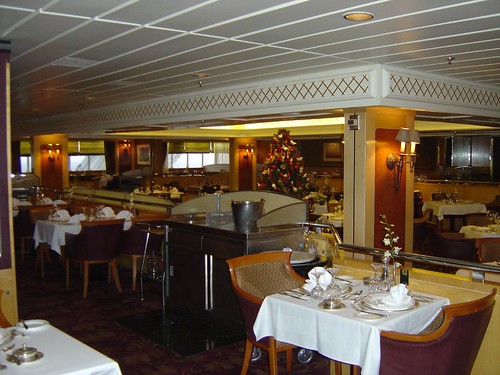
June 10, 2007
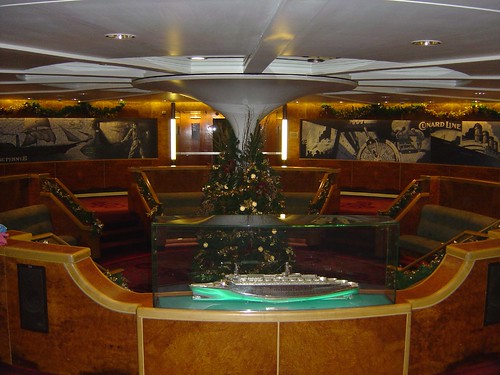
June 6, 2007
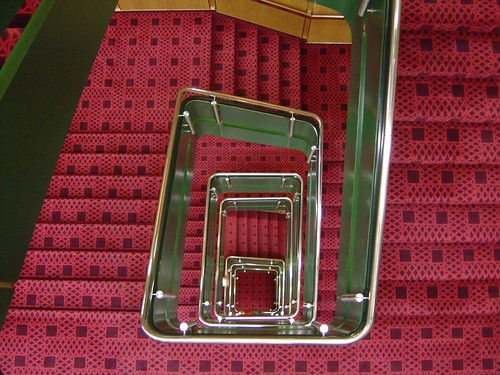
June 4, 2007
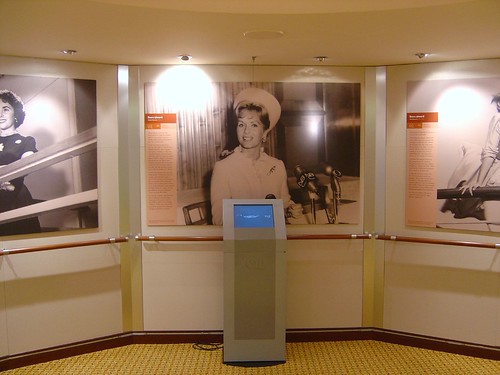
June 3, 2007
Cunard's QE2 Hosts Falklands Reunion
this on travelvideo.tv
"Valencia, CA (June 1, 2007) The world's most famous and best loved ship, Queen Elizabeth 2, will host 100 Southampton veterans at a special lunch, in conjunction with the City of Southampton, to commemorate the 25th Anniversary of the Falklands Campaign on Sunday June 10 while QE2 is berthed in her homeport.
QE2 joined the ranks of other famous Cunarders, including Mauretania, Aquitania, Queen Mary and Queen Elizabeth when she was called up to serve her country. She was almost unrecognisable following the nine-day conversion to troopship when the public lounges were turned into dormitories, fuel pipes were taken through the ship down to the engine room so she could be refueled at sea; helipads were constructed fore and aft, and the carpets were covered with 2,000 sheets of hardboard. Over 650 crewmembers volunteered for the voyage to look after the 3,000 members of the Fifth Infantry Brigade which the ship transported to South Georgia. During the voyage south, in order to avoid detection the ship was blacked out and the radar switched off and Captain Jackson and his fellow officers on the bridge were plunged into a navigational nightmare as they steamed on without modern aids, through an icefield in the dark.
Her tumultuous welcome home with the warship survivors on June 11, 1982 was a national event and HM The Queen Mother welcomed QE2 home from the decks of the Royal Yacht Britannia.
Her return to Southampton was followed by a nine-week period of refitting and restoring the world's foremost passenger liner.
Captain Jackson received the following message from the Queen Mother:
"I am pleased to welcome you back as QE2 returns to home waters after your tour of duty in the South Atlantic. The exploits of your own ship's company and the deeds of valour of those who served in Antelope, Coventry, and Ardent have been acclaimed throughout the land and I am proud to add my personal tribute".
To which Captain Jackson replied:
"Please convey to Her Majesty Queen Elizabeth, the Queen Mother, our thanks for her kind message. Cunard's Queen Elizabeth 2 is proud to have been of service to Her Majesty's Forces".
QE2 was not the only Cunard ship to go to the Falklands. The company's Cunard Countess, Saxonia, England and Atlantic Causeway were also utilised and its Atlantic Conveyor was sunk with the loss of six Cunard officers and crew including its Captain, Ian North.
According to Sir Winston Churchill, the efforts of Queen Mary, Queen Elizabeth and Aquitania, reduced the length of World War II by a year as a result of ferrying 15,000 American GI's - six times more than their maximum passenger carry - on each of their 50, 30-knot dashes across the Atlantic.
And, as far back as the Crimea, Cunard was helping out when, among other things, the company transported all the horses that charged with the Light Brigade."
"Valencia, CA (June 1, 2007) The world's most famous and best loved ship, Queen Elizabeth 2, will host 100 Southampton veterans at a special lunch, in conjunction with the City of Southampton, to commemorate the 25th Anniversary of the Falklands Campaign on Sunday June 10 while QE2 is berthed in her homeport.
QE2 joined the ranks of other famous Cunarders, including Mauretania, Aquitania, Queen Mary and Queen Elizabeth when she was called up to serve her country. She was almost unrecognisable following the nine-day conversion to troopship when the public lounges were turned into dormitories, fuel pipes were taken through the ship down to the engine room so she could be refueled at sea; helipads were constructed fore and aft, and the carpets were covered with 2,000 sheets of hardboard. Over 650 crewmembers volunteered for the voyage to look after the 3,000 members of the Fifth Infantry Brigade which the ship transported to South Georgia. During the voyage south, in order to avoid detection the ship was blacked out and the radar switched off and Captain Jackson and his fellow officers on the bridge were plunged into a navigational nightmare as they steamed on without modern aids, through an icefield in the dark.
Her tumultuous welcome home with the warship survivors on June 11, 1982 was a national event and HM The Queen Mother welcomed QE2 home from the decks of the Royal Yacht Britannia.
Her return to Southampton was followed by a nine-week period of refitting and restoring the world's foremost passenger liner.
Captain Jackson received the following message from the Queen Mother:
"I am pleased to welcome you back as QE2 returns to home waters after your tour of duty in the South Atlantic. The exploits of your own ship's company and the deeds of valour of those who served in Antelope, Coventry, and Ardent have been acclaimed throughout the land and I am proud to add my personal tribute".
To which Captain Jackson replied:
"Please convey to Her Majesty Queen Elizabeth, the Queen Mother, our thanks for her kind message. Cunard's Queen Elizabeth 2 is proud to have been of service to Her Majesty's Forces".
QE2 was not the only Cunard ship to go to the Falklands. The company's Cunard Countess, Saxonia, England and Atlantic Causeway were also utilised and its Atlantic Conveyor was sunk with the loss of six Cunard officers and crew including its Captain, Ian North.
According to Sir Winston Churchill, the efforts of Queen Mary, Queen Elizabeth and Aquitania, reduced the length of World War II by a year as a result of ferrying 15,000 American GI's - six times more than their maximum passenger carry - on each of their 50, 30-knot dashes across the Atlantic.
And, as far back as the Crimea, Cunard was helping out when, among other things, the company transported all the horses that charged with the Light Brigade."
'Cruise' and 'fun' are mutually exclusive notions (QE2 included)
THis on northjersey.com
"Last week it seemed as if everyone was talking about vacations.
"You didn't go anywhere on vacation last year, did you?" my mother asked on the phone, hours before my brother and his family departed for Disney.
"I don't think so," I replied. "I don't remember."
"You don't remember because you didn't go anywhere," she said. "Why don't you plan something FUN this year?"
"Fun like what?"
"Fun like a cruise," she said. "You'd get away, meet some new people ..."
Years ago, my parents went on a cruise to the Caribbean -- on the QE2, no less. But as far as I could remember, they didn't like it.
"No, we liked it, eventually," my mother said. "I was sick for two days, but I was fine after they gave me the shots. And we got such a good deal!"
She went on and on about how I had to go SOMEWHERE this year and then recounted every minute of her cruise. But, no, I still wasn't interested. Then, a few hours later, I went to the office and walked right into a conversation about ... cruises.
"I'm taking one in two weeks," said co-worker A.
"We took one a few years ago," said co-worker B. "My wife and I had a really good time."
"Ugh. A cruise? Not for me," said co-worker C.
I was with co-worker C. And that's "C" as in C-sick, C-monster, lost at C and "No, thanks; C you when you get back."
"But cruises are so much fun!" Miss A insisted.
"Please, I just had this whole conversation with my mother a few hours ago," I said. "She and my father sailed once on the QE2. They're still talking about it."
"The what?" asked Mr. C., who is a mere 24.
"The QE2," I repeated. "Some big boat named for Queen Elizabeth II. They went to the islands for a week. The whole thing cost them $239."
Co-worker A was SHOCKED at the price. "Are you kidding me? They paid $239 for an entire week? How long ago did they take that trip?"
"I don't remember," I said. "Probably during the reign of Queen Elizabeth I. Plus, they got a porthole -- which I guess is a good thing, right?"
Miss A was stunned: "A week on the QE2 for $239? With a porthole? People pay FORTUNES for portholes!"
See, this is part of the problem: I'm going to go on vacation and spend a week in a room that may or may not have a porthole? And it's on the WATER?
Not going to happen.
"You're just being silly," Miss A insisted. "It's like being on a big, beautiful hotel!"
"Hey, I love big, beautiful hotels," I said. "I just don't like the kind that MOVES. Why does it have to move? Why can't it just stay home and mind its own business?"
"Well, don't tell me you're AFRAID of water," she said. "You're a Cancerian. That's a water sign. You should be comfortable on the water."
True, I was born under the sign of Cancer the crab. So? What does that mean?
"It means you LOVE the water!"
"I don't believe all that astrology stuff," I groaned.
"But you're still a crab!" she said. "And you love to cook and eat crabs. You've told me that a million times."
True. And now that I think about it, my mother is an Aquarius, and she once cooked and ate the guy who read our water meter.
Still, the idea of spending a week trapped on a boat, in the middle of the ocean ... it makes me nervous just thinking about it.
"First of all," A said, "you're not trapped. The boats are very spacious. And there's so much to do! Casinos! Buffets! Live shows! And poker! You love poker, don't you?"
Yeah, just what I need: being in the middle of the ocean and hearing someone yell, "All in!"
"They also have water rides now! And rock climbing! That's the new big thing! Doesn't that sound cool?"
Just what I need, Part 2: being on a boat with a million pounds of rocks on it.
"OK, look," I said. "I am not interested. I do not want to be on a big hotel that moves. And I don't want to go to any of those islands where you get off for a couple of hours and buy straw hats and souvenirs that were probably made in China."
"Yes," she said, "but you don't have to go to the islands. You could take a cruise to anywhere! Or, I know! You could take a cruise to nowhere!"
NOWHERE?
Nah. That's where I went last year."
"Last week it seemed as if everyone was talking about vacations.
"You didn't go anywhere on vacation last year, did you?" my mother asked on the phone, hours before my brother and his family departed for Disney.
"I don't think so," I replied. "I don't remember."
"You don't remember because you didn't go anywhere," she said. "Why don't you plan something FUN this year?"
"Fun like what?"
"Fun like a cruise," she said. "You'd get away, meet some new people ..."
Years ago, my parents went on a cruise to the Caribbean -- on the QE2, no less. But as far as I could remember, they didn't like it.
"No, we liked it, eventually," my mother said. "I was sick for two days, but I was fine after they gave me the shots. And we got such a good deal!"
She went on and on about how I had to go SOMEWHERE this year and then recounted every minute of her cruise. But, no, I still wasn't interested. Then, a few hours later, I went to the office and walked right into a conversation about ... cruises.
"I'm taking one in two weeks," said co-worker A.
"We took one a few years ago," said co-worker B. "My wife and I had a really good time."
"Ugh. A cruise? Not for me," said co-worker C.
I was with co-worker C. And that's "C" as in C-sick, C-monster, lost at C and "No, thanks; C you when you get back."
"But cruises are so much fun!" Miss A insisted.
"Please, I just had this whole conversation with my mother a few hours ago," I said. "She and my father sailed once on the QE2. They're still talking about it."
"The what?" asked Mr. C., who is a mere 24.
"The QE2," I repeated. "Some big boat named for Queen Elizabeth II. They went to the islands for a week. The whole thing cost them $239."
Co-worker A was SHOCKED at the price. "Are you kidding me? They paid $239 for an entire week? How long ago did they take that trip?"
"I don't remember," I said. "Probably during the reign of Queen Elizabeth I. Plus, they got a porthole -- which I guess is a good thing, right?"
Miss A was stunned: "A week on the QE2 for $239? With a porthole? People pay FORTUNES for portholes!"
See, this is part of the problem: I'm going to go on vacation and spend a week in a room that may or may not have a porthole? And it's on the WATER?
Not going to happen.
"You're just being silly," Miss A insisted. "It's like being on a big, beautiful hotel!"
"Hey, I love big, beautiful hotels," I said. "I just don't like the kind that MOVES. Why does it have to move? Why can't it just stay home and mind its own business?"
"Well, don't tell me you're AFRAID of water," she said. "You're a Cancerian. That's a water sign. You should be comfortable on the water."
True, I was born under the sign of Cancer the crab. So? What does that mean?
"It means you LOVE the water!"
"I don't believe all that astrology stuff," I groaned.
"But you're still a crab!" she said. "And you love to cook and eat crabs. You've told me that a million times."
True. And now that I think about it, my mother is an Aquarius, and she once cooked and ate the guy who read our water meter.
Still, the idea of spending a week trapped on a boat, in the middle of the ocean ... it makes me nervous just thinking about it.
"First of all," A said, "you're not trapped. The boats are very spacious. And there's so much to do! Casinos! Buffets! Live shows! And poker! You love poker, don't you?"
Yeah, just what I need: being in the middle of the ocean and hearing someone yell, "All in!"
"They also have water rides now! And rock climbing! That's the new big thing! Doesn't that sound cool?"
Just what I need, Part 2: being on a boat with a million pounds of rocks on it.
"OK, look," I said. "I am not interested. I do not want to be on a big hotel that moves. And I don't want to go to any of those islands where you get off for a couple of hours and buy straw hats and souvenirs that were probably made in China."
"Yes," she said, "but you don't have to go to the islands. You could take a cruise to anywhere! Or, I know! You could take a cruise to nowhere!"
NOWHERE?
Nah. That's where I went last year."
QM2 Hosts Superstar-packed Gala Ball
"Last week, the flagship of Cunard Cruises, the stunning Queen Mary 2, saw the arrival of a number of celebrity guests for The Britannia Ball.
The ball included dinner, dancing and cocktails and acted as a fundraiser for the New York City Opera and Brooklyn Academy of Music.
Music lovers present at the event included Sex and the City star Cynthia Nixon, actor Chevy Chase and Michael Emerson, Benjamin Linus on television’s Lost.
"All proceeds from The Britannia Ball will be divided equally between the two organizations and will support their missions to produce exciting works on stage," Cunard Cruises reports.
It adds that the hosting of the event on "the world’s grandest cruise liner" gave its esteemed guests access to facilities usually used by cruise holiday passengers, including the Royal Court Theatre and Illuminations, Veuve Clicquot champagne bar and Queens Room ballroom.
Cunard Cruises finished constructing the QM2 - then both the largest ocean liner and cruise ship in the world - in 2003, though the vessel has since lost this latter title to the Freedom of the Seas from Royal Caribbean Cruises"
The ball included dinner, dancing and cocktails and acted as a fundraiser for the New York City Opera and Brooklyn Academy of Music.
Music lovers present at the event included Sex and the City star Cynthia Nixon, actor Chevy Chase and Michael Emerson, Benjamin Linus on television’s Lost.
"All proceeds from The Britannia Ball will be divided equally between the two organizations and will support their missions to produce exciting works on stage," Cunard Cruises reports.
It adds that the hosting of the event on "the world’s grandest cruise liner" gave its esteemed guests access to facilities usually used by cruise holiday passengers, including the Royal Court Theatre and Illuminations, Veuve Clicquot champagne bar and Queens Room ballroom.
Cunard Cruises finished constructing the QM2 - then both the largest ocean liner and cruise ship in the world - in 2003, though the vessel has since lost this latter title to the Freedom of the Seas from Royal Caribbean Cruises"
Subscribe to:
Posts (Atom)
LinkWithin
